

Performance Management Process: Steps, Best Practices & Implementation Guide

Table of contents
- What Is the Performance Management Process?
- Why a Structured Performance Management Process Matters
- 6 Steps of the Performance Management Process
- How to Implement a Performance Management Process
- How to Improve the Performance Management Process
- What Is a Performance Management System?
- What Is Performance Management Software?
- Finding the Right Performance Management Software
- Employee Performance Management Best Practices
- Wrapping Up
- Frequently Asked Questions
In today’s competitive digital and software-driven business environment, organizational success depends heavily on how effectively employee performance is managed, measured, and improved. High-performing teams are not built through annual reviews alone. They are the result of a structured and continuous performance management process that aligns individual contributions with broader business objectives.
Performance management is no longer a once-a-year administrative exercise. Modern organizations require an ongoing framework that supports goal alignment, continuous feedback, skill development, and performance evaluation. This shift is especially critical for digital and software companies, where innovation cycles are short, teams are distributed, and outcomes depend on consistent execution rather than physical supervision.
In this guide, we explore what the performance management process is, why it matters, and how organizations can implement it effectively to improve employee performance management and drive sustainable business growth.
What Is the Performance Management Process?
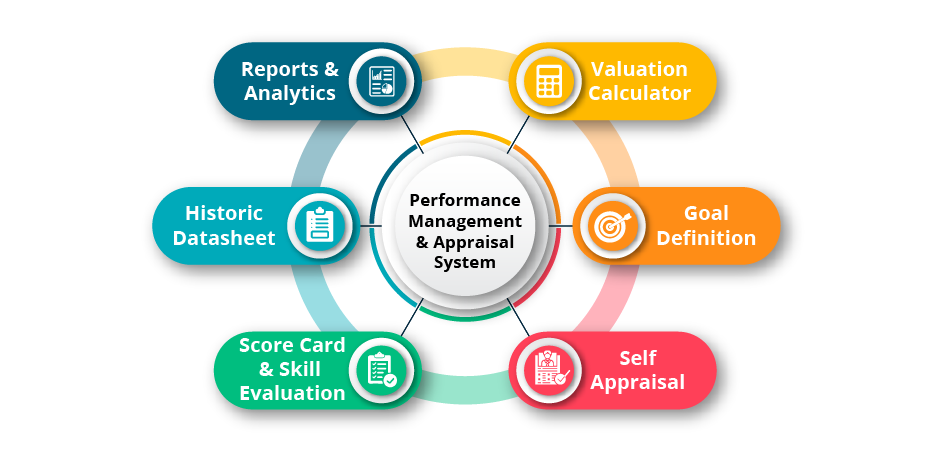
The performance management process is a structured and continuous approach used by organizations to ensure that employee activities, behaviors, and outcomes align with business goals. It defines how expectations are set, how progress is monitored, how feedback is delivered, and how performance is evaluated over time.
At its core, performance management focuses on clarity and accountability. Employees understand what is expected of them, how success is measured, and how their work contributes to organizational priorities. Unlike a one-time performance review process, performance management is cyclical and ongoing.
A well-designed employee performance management framework improves transparency, strengthens alignment between teams and leadership, and creates a culture of continuous improvement. For digital and software organizations, this structured approach helps identify skill gaps, improve engagement, and maintain consistent performance standards in fast-changing environments.
Why a Structured Performance Management Process Matters
Organizations that rely solely on periodic performance reviews often struggle with misalignment, delayed feedback, and disengaged employees. A structured performance management process addresses these challenges by integrating goal setting, monitoring, and development into everyday operations.
For knowledge-driven industries such as software and digital services, performance outcomes are closely tied to innovation, collaboration, and delivery timelines. A continuous performance management approach enables managers to respond quickly to performance issues, support skill development, and keep teams aligned with evolving business needs.
By embedding regular feedback and measurable objectives into the workflow, organizations improve accountability while reducing ambiguity around expectations. This makes performance management a strategic enabler rather than an administrative burden.
6 Steps of the Performance Management Process
The performance management process follows a series of interconnected steps designed to support continuous alignment and improvement. While terminology may vary across organizations, the underlying structure remains consistent.
1. Defining Performance Management Goals
The process begins with clearly defining performance goals that align individual efforts with organizational priorities. These goals should be specific, measurable, and achievable. In digital and software organizations, goals may relate to product delivery milestones, quality benchmarks, innovation targets, or customer outcomes.
Clear goal definition ensures employees understand what success looks like and how their performance will be evaluated.
2. Ongoing Monitoring and Continuous Feedback
Performance management is ineffective without regular monitoring. This step involves tracking progress against goals and providing ongoing feedback rather than waiting for formal reviews, often supported by employee time tracking software that ensures accurate visibility into effort allocation. Continuous feedback helps employees adjust quickly, address challenges early, and remain aligned with expectations.
In fast-paced environments, timely feedback plays a critical role in maintaining momentum and meeting project timelines.
3. Development and Coaching
Performance management is not only about evaluation but also about growth. This step focuses on identifying skill gaps and providing targeted coaching or development opportunities. For software and digital teams, this may include upskilling in new technologies, improving collaboration capabilities, or strengthening leadership skills.
Development-focused performance management increases engagement and supports long-term performance improvement.
4. Performance Review and Evaluation
The performance review process involves assessing employee outcomes over a defined period and comparing results against established goals. Reviews provide an opportunity to recognize high performers, understand performance gaps, and make informed decisions related to progression, rewards, or corrective actions.
When supported by continuous data and feedback, performance reviews become more objective and meaningful.
5. Reward and Recognition
Effective performance management includes a structured approach to reward and recognition. Acknowledging strong performance reinforces desired behaviors and motivates employees to maintain high standards. In digital organizations, rewards may include financial incentives, role expansion, or visible recognition.
Recognition should be timely and aligned with measurable contributions.
6. Continuous Improvement and Optimization
The final step closes the loop. Insights from performance reviews are used to refine goals, improve processes, and enhance performance management practices. Continuous improvement ensures the performance management process evolves alongside business needs and workforce dynamics.
This cyclical approach keeps performance management relevant, actionable, and aligned with organizational growth.
How to Implement a Performance Management Process
Implementing a performance management process requires more than documenting steps. It demands cultural alignment, leadership involvement, and consistent execution across teams. Organizations should begin by clearly communicating the purpose of performance management and how it supports both employee growth and business outcomes.
The first step is leadership alignment. Managers must understand their role in setting expectations, providing feedback, and coaching employees. Without managerial ownership, performance management becomes a formality rather than a value driver. Training managers on goal setting, feedback delivery, and evaluation techniques is critical for consistency.
Next, organizations should define standardized performance frameworks while allowing flexibility across roles. Clear goal-setting mechanisms, review cycles, and feedback loops ensure alignment without rigidity. Technology can support this stage by enabling centralized tracking, documentation, and reporting.
Finally, implementation should be phased. Piloting the process with select teams allows organizations to refine frameworks before scaling. Continuous feedback from employees and managers helps identify gaps early. A successful performance management process is one that evolves with business needs rather than remaining static.
How to Improve the Performance Management Process
Improving the performance management process requires a shift from episodic reviews to continuous performance management. Organizations should prioritize regular feedback over annual evaluations to keep performance conversations relevant and timely.
One key improvement area is feedback quality. Managers must be trained to provide constructive, actionable feedback rather than generic assessments. A feedback culture encourages open dialogue and helps employees course-correct early. This improves engagement and performance outcomes.
Another improvement lever is data-driven decision-making. Performance insights derived from measurable outcomes, productivity trends, and goal progress through workplace analytics software provide objectivity and reduce bias while enabling deeper operational visibility. Analytics help organizations identify high performers, skill gaps, and development needs.
Organizations should also regularly review and update performance frameworks. As business priorities change, performance metrics must evolve accordingly. Stagnant goals weaken relevance and effectiveness. Continuous optimization ensures the performance management process remains aligned with strategic objectives and workforce realities.
What Is a Performance Management System?
A performance management system is the structured framework that enables organizations to plan, monitor, review, and improve employee performance consistently. It includes defined processes, evaluation criteria, documentation standards, and governance mechanisms.
For digital and software organizations, a performance management system ensures alignment across teams operating in fast-paced and distributed environments. It creates consistency in how performance is assessed while supporting transparency and accountability across the organization.
What Is Performance Management Software?
Performance management software is a digital solution that supports and automates key elements of the performance management process. It reduces manual effort in goal tracking, feedback collection, performance reviews, and reporting.
In remote or hybrid work environments, performance management software enables real-time visibility into progress and performance trends through structured employee productivity monitoring that provides actionable insights into output, efficiency, and goal alignment. It improves communication, supports continuous feedback, and provides analytics that inform managerial decisions. Software-driven performance management enhances efficiency while ensuring consistency and scalability.
Finding the Right Performance Management Software
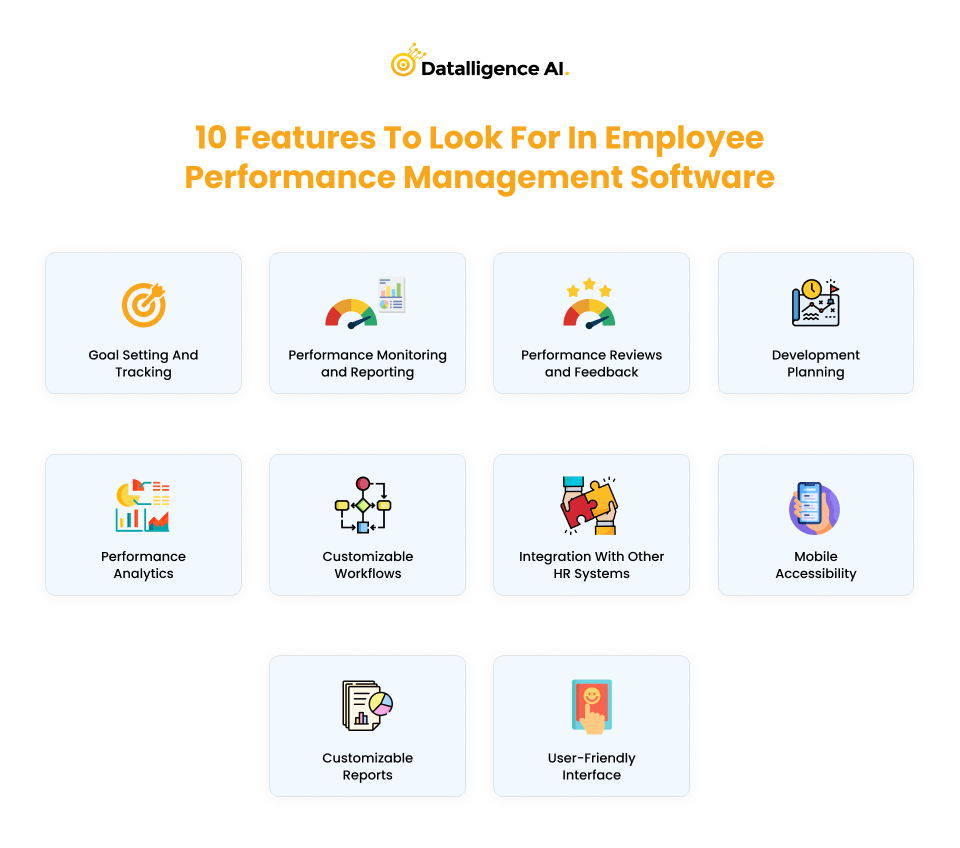
You should know that choosing the proper performance management system is important in order to take full advantage of it. Here are some criteria to follow while choosing software for your IT or digital company:
1. Scalability
This is an important feature that applies to ensure that the system will be able to grow in tandem with your company. For instance, in the case of digital companies that are growing rapidly, the need to expand the number of users and features is imperative and should be performed in a seamless manner.
2. Integration
The software should integrate easily with other tools that your company uses. These include project management, HR, or payroll systems. Such a level of integration reduces manual data entry and ensures that all required information is available in one place.
3. User-friendliness
The application should be designed so that employees and managers can use it easily. Otherwise, the resistance will come, and adoption will be slow as well.
4. Customization
Search for software that permits customization of performance metrics or goals to suit the needs of the company. Customization guarantees that the software will remain relevant in the particular business.
5. Real-Time Feedback
Clear real-time feedback, which involves giving and receiving feedback, is necessary in fast-changing industries such as software development. Real-time feedback is essential as it helps mitigate some of the issues that may derail timelines for projects.
6. Analytics and Reporting
The software should provide basic analytic and reporting tools to allow the user to analyze employee performance using statistics.
7. Support and Training
Evaluate the measure of support and training that the software vendor provides for their software. Adequate support makes sure that everyone can resolve any problem that has arisen and that the team optimally utilizes the software.
Employee Performance Management Best Practices
Effective employee performance management relies on consistent best practices.
Align performance goals with business objectives to create clarity and purpose. Encourage continuous feedback rather than annual-only reviews. Invest in employee development to support long-term growth and retention.
Promote transparency by clearly communicating evaluation criteria and expectations. Leverage technology to reduce administrative effort and improve performance visibility. Together, these best practices ensure performance management drives both productivity and engagement.
Also Read: What is a Performance Improvement Plan (PIP)?
Wrapping Up
A structured performance management system like ProHance is essential for organizations operating in dynamic, digital environments. When supported by the right systems and practices, performance management improves accountability, employee development, and business outcomes.
Organizations that invest in continuous, data-driven performance management are better positioned to sustain growth, adapt to change, and maintain competitive advantage over time.
Frequently Asked Questions
Q1. What are the Challenges in a Performance Management Process?
Challenges that can be experienced in the process of performance management include placing high expectations and no room for goal progress, lack of sufficient feedback, and lack of employee engagement. In order to deal with these challenges, the organization will have to develop specific and realistic objectives and promote regular feedback and engagement in discussions on performance management practices.
Q2. Why Do You Need Performance Management Software or Systems?
Performance management software is aimed at automating and streamlining the performance management process. It assists companies in establishing objectives, monitoring advancement, obtaining and providing feedback, and evaluating employees’ performance. Such software is advantageous for handling feedback in digital and software companies, where remote employees are common. The software unquestionably helps agencies with analytics and reporting to aid in decision-making and recover performance within the organization.
Q3. Performance management systems incorporation for remote teams: Is it possible?
Yes, it is possible to modify performance management systems that cater for the unique needs of remote teams. Software development companies and other digital agencies with dispersed teams, such as performance management software, can be used to capture feedback, track performance metrics, and review performance in real-time. Performance management applications also integrate with collaboration tools to enhance remote performance management.
What are the prerequisites before starting a performance management process?
Organizations should define clear business objectives, establish performance metrics, train managers, and communicate expectations to employees. Leadership alignment and cultural readiness are essential to ensure performance management is adopted as a growth-focused practice.
Who should be involved at each stage of the performance management process?
Leadership defines direction, managers set goals and provide feedback, and employees actively participate through self-assessment and improvement. HR or operations teams support governance, consistency, and process standardization across departments.
How do you standardize the performance management process across departments?
Standardization is achieved by using common goal-setting frameworks, review cycles, evaluation criteria, and documentation guidelines, while allowing role-specific flexibility to address different functional requirements.
What documents and templates are required for an effective performance management process?
Common documents include goal-setting templates, feedback forms, performance review records, development plans, and competency frameworks. These ensure consistency, transparency, and traceability throughout the performance management cycle.
How often should the performance management process be reviewed and updated?
Most organizations review their performance management process annually, with interim evaluations when business priorities change. Regular updates ensure relevance, alignment with strategy, and continued effectiveness.
Learn how ProHance can help

Nikita Bhutani
With nearly 14 years of experience in the Learning and Development (L&D) sector, Nikita brings a wealth of knowledge and expertise to her role at ProHance. As the head of Content Strategy within the Growth & Demand Generation team, she plays a pivotal role in shaping the organization’s content initiatives. Nikita’s diverse background spans various industry segments, including BPO, IT, and BFSI, providing her with a deep understanding of the unique challenges each sector faces.
