



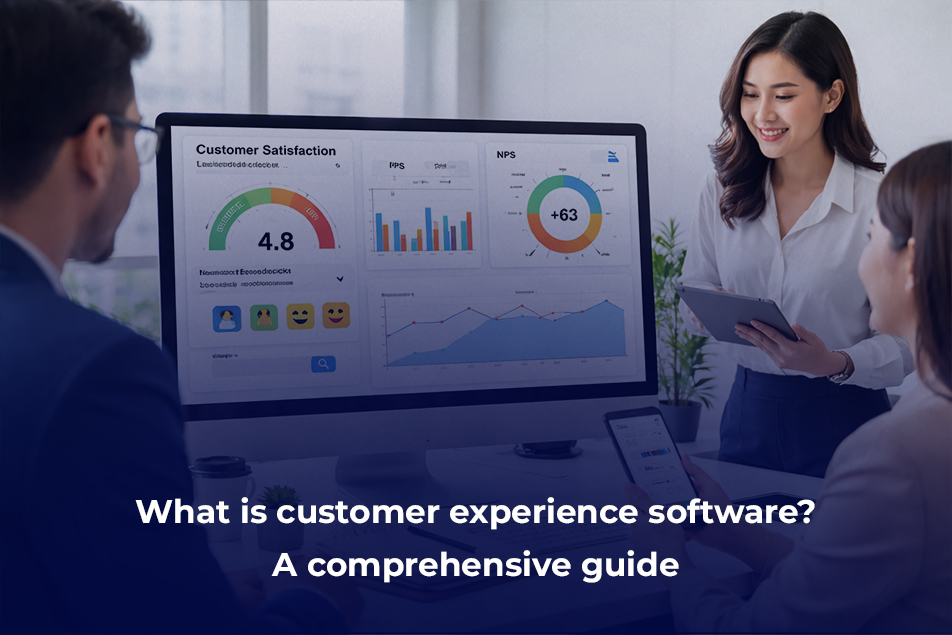
What is Customer Experience Software? A Comprehensive Guide
Bad customer experiences cost businesses millions of customers every year. Most companies find out about problems too late – after customers have already left.
Customer experience software changes this. These tools identify issues early and fix them before damage occurs. 89% of companies see customer experience as the key way to stay competitive. And a good customer experience software helps you to do that!
What is Customer Experience?
Customer experience covers every single interaction a customer has with your business. This includes:
- Browsing your website
- Reading your emails/ newsletters
- Calling customer support
- Using your product
- Getting billed
- Returning items
- Leaving a comment
It’s bigger than just customer service. Customer service fixes problems after they happen. Customer experience prevents problems from happening in the first place.
Customer Experience Methodology
| Methodology | Focus Area | Benefit |
| Customer Journey Mapping | End-to-end customer interactions | Identifies pain points and opportunities |
| Voice of the Customer (VoC) | Collecting direct customer feedback | Aligns strategy with customer needs |
| Net Promoter Score (NPS) | Customer loyalty measurement | Tracks overall satisfaction and advocacy |
| Customer Satisfaction (CSAT) | Rating specific interactions | Improves service at key touchpoints |
| Customer Effort Score (CES) | Ease of completing tasks | Reduces friction and boosts retention |
| Closed-Loop Feedback | Acting on collected feedback | Builds trust and loyalty |
What is CX Software?
CX software is a tool that watches every customer interaction. Here’s what it does:
- Collects feedback through surveys, reviews, and support tickets
- Tracks how customers behave on websites and apps
- Analyzes what people are saying on social media
- Spots patterns in customer complaints
- Predicts which customers might leave
When all this information comes together, businesses can get the complete idea of what customers actually experience.
Why Do Businesses Need This Software?
Here’s the thing about customer data – it’s everywhere. Support tickets live in one system. Website analytics live in another. Survey responses get buried in email.
CX software brings it all together.
Better Customer Insights
Companies using CX software know things like:
- Which product features customers love most?
- What time of day do customers prefer to shop?
- Why customers abandon their shopping carts
- Which support agents get the best ratings
This isn’t guesswork anymore. It’s data.
Faster Problem Resolution
CX software leads to better and faster problem resolution:
- Software spots a potential issue
- Team fixes it proactively
- The customer never experiences the problem
- Customer stays happy
Personalization That Actually Works
Generic marketing messages don’t work anymore. Customers expect businesses to know them.
CX software makes this possible. It
- tracks what each customer likes,
- how they prefer to communicate, and
- what problems they’ve had before.
The result? Personalized experiences that feel natural, not creepy.
6 Key Features of Customer Experience Software That Matter
Not all CX software is created equal. The best platforms include these essential features:
- Feedback Collection and Management
- Smart feedback routing
- Real-Time Analytics and Reporting
- Customer Journey Mapping
- Automation That Actually Helps
- Integration capabilities
Feedback Collection and Management
Multi-channel feedback capture:
- Website pop-ups and embedded surveys
- Email and SMS questionnaires
- Social media monitoring
- Review site tracking
- Support interaction analysis
Smart feedback routing
- Automatic categorization of responses
- Priority scoring for urgent issues
- Department-specific routing
- Follow-up tracking
Real-Time Analytics and Reporting
Live dashboards show:
- Current customer satisfaction scores
- Active complaint trends
- Team performance metrics
- Response time averages
- Seasonal satisfaction patterns
- Improvement impact measurement
Customer Journey Mapping
Visual journey maps show exactly where customers struggle. Maps highlight:
- High-friction touchpoints
- Abandonment hotspots
- Successful conversion paths
- Cross-department handoff issues
Automation That Actually Helps
Smart workflows:
- Auto-route negative feedback to managers
- Trigger follow-up surveys after support interactions
- Send alerts when satisfaction drops
- Schedule proactive outreach to at-risk customers
Integration capabilities
- CRM system connections
- Support platform linking
- Marketing automation sync
- Business intelligence feeds
How ProHance Transforms Customer Experience?
Most CX software focuses on the customer-facing side. ProHance takes a different approach. It focuses on the people delivering the experience. Happy, productive employees create great customer experiences.
Real-Time Operational Visibility
ProHance gives managers instant visibility into team performance through advanced operational analytics that help spot risks early and improve service quality proactively. This means:
- Spotting understaffed teams before customers notice delays
- Identifying training needs before service quality drops
- Balancing workloads before employees get overwhelmed
- Preventing bottlenecks that create customer wait times
Strategic Workforce Allocation
Customer demands change throughout the day. ProHance helps businesses adapt in real-time with intelligent remote workforce management capabilities that ensure distributed teams remain aligned and responsive
- Morning rush in customer support? ProHance identifies the surge and helps managers reassign team members.
- Unexpected spike in technical issues? The platform flags the pattern and suggests bringing in specialized resources.
- Client deadline approaching? ProHance tracks progress and alerts managers to potential delays.
Employee Experience = Customer Experience
Stressed employees provide poor service. Engaged employees go above and beyond.
ProHance helps create better employee experiences by:
- Preventing excessive overtime
- Ensuring fair workload distribution
- Identifying skill development opportunities
- Recognizing high performers
What are CX Software Implementation Best Practices?
Getting CX software right requires more than just buying the platform. Here are the essentials:
- Start with clear goals and define what customer experience success looks like
- Involve the right teams like CSRs, marketing talents, operations manager, and BDEs
- Insufficient data leads to bad decisions. Focus on data quality
- create action plans and success measurement methods
| Industry | Best Practice |
| Retail & E-commerce | Integrate CX with CRM & loyalty systems |
| Banking & Finance | Ensure compliance & secure customer data |
| Healthcare | Streamline patient feedback & appointment flows |
| IT & BPO Services | Use real-time performance analytics |
| Hospitality & Travel | Centralize booking, feedback, and service tools |
| Manufacturing | Link CX insights with supply chain & delivery |
Conclusion
The customer experience methodology supported by modern platforms creates systematic approaches to building stronger relationships. When combined with operational excellence tools like ProHance, organizations can address both customer-facing and employee-facing aspects of experience delivery.
FAQs
What is customer experience in simple words?
Customer experience covers every interaction customers have with a business. This includes:
- website visits,
- phone calls,
- purchases, and
- support tickets.
Good experiences build loyalty. Poor experiences drive customers away.
What’s the difference between CX software and CRM?
CRM systems manage customer data and sales processes. CX software analyzes customer experience quality and identifies improvement opportunities. CRM tracks customer information. CX software measures customer satisfaction.
How does customer experience methodology help improve retention?
Customer experience methodology maps every step of the customer journey. It identifies pain points where customers struggle or get frustrated. Companies fix these issues systematically, creating smoother experiences that keep customers happy and loyal.
Learn how ProHance can help

Arvind Sagar
Arvind Sagar is a Senior Advisor at ProHance, bringing extensive experience in strategic advisory roles. He has worked across diverse industries including IT services, consulting, and business transformation. At ProHance, he guides enterprise clients in driving operational efficiency and digital transformation.
