



How ProHance Helps IT Firms Optimize Remote and Hybrid Teams
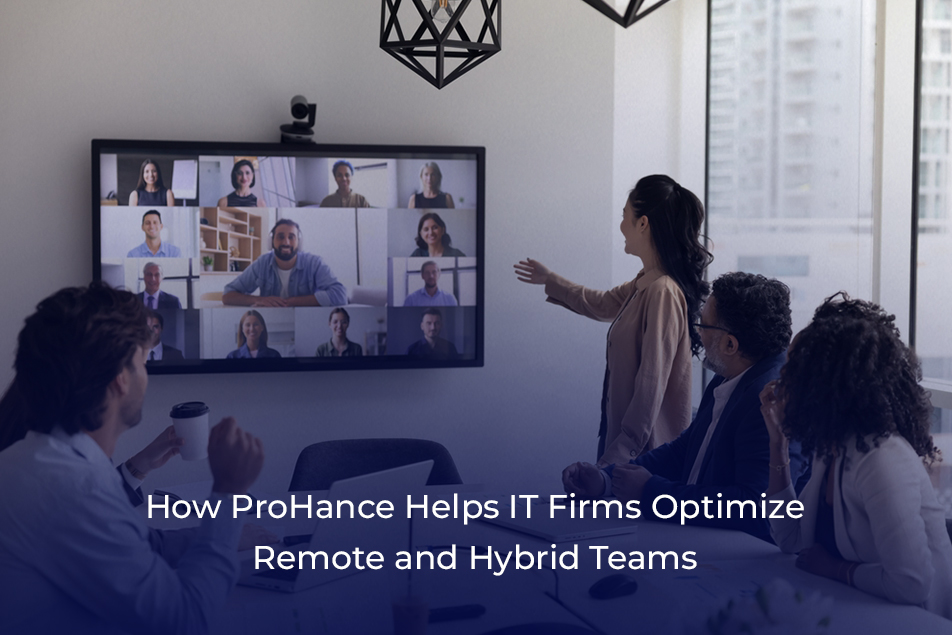
In recent years, the traditional office has morphed into a unique combination of hybrid and remote teams. While this does bring about its own challenges, when managed well, it can also be an opportunity to explore creativity and productivity.
In this article, we will explore the best practices of hybrid workforce management for IT that enterprises can put in place to optimize their remote and hybrid teams, to ensure success irrespective of where they work.
- Invest in the Right Technology
- Establish Clear Communication Channels
- Set Clear Goals and Expectations
- Cultivate a Strong Team Culture
- Foster Trust and Autonomy
- Monitor Productivity and Performance
- Encourage Professional Development
- Provide Support and Resources
Invest in the Right Technology
Working from home has made us more reliant on technology to function efficiently in our roles. A responsible manager must ensure all remote team members have access to the technology they need to perform their role. It is important to invest in tools for onboarding, internal communication, seamless collaboration, workflow optimization, accurate reporting, etc. This new tech helps ease workload, keeps team members engaged, ensures smooth teamwork, and improves time management.
Establish Clear Communication Channels
Communication is key when working with remote and hybrid teams. HR and managers should set up communication channels that enable transparent communication to help all team members stay updated, involved, and aligned with the company’s goals. A standard level of communication must be established to indicate how often and in what ways – emails, chats, video calls, or collaborative platforms – people should communicate.
Additionally, managers should conduct regular one-on-one check-ins with team members to create a feeling of connection and support. Apart from that, it helps to arrange face-to-face meetings to develop strong bonds, crucial for collaboration.
Set Clear Goals and Expectations
In remote and hybrid work settings, it is easy for employees to feel adrift from common goals, and this can affect morale as well as efficiency. HR should work with managers to establish precise goals and expectations. All team members, remote and hybrid, should know their targets as well as key performance indicators (KPIs). Knowing what is expected helps workers understand their duties better and track their performance. This also creates a sense of accountability and purpose, making it easier to fast-track careers.
Cultivate a Strong Team Culture
Team culture and rapport are important for employees to be happy and feel engaged. However, it does get challenging when many team members work remotely or in hybrid setups. Managers and HR heads can come up with creative online team-building exercises, appreciation ceremonies, and social events. These can help diverse teams bond with each other and help them work together more closely.
Further, creating opportunities to facilitate open conversations and feedback goes a long way in building an all-inclusive work environment that supports everyone.
Foster Trust and Autonomy
It’s great to build a strong team culture. However, in the case of remote and hybrid workforces, it is just as important to build trust and autonomy at work to ensure employee satisfaction and performance. HR should encourage managers to let employees take control of their work and responsibilities, leading to higher levels of motivation and a greater sense of responsibility. It might be tempting to micromanage, but this can impact team morale and innovation, affecting overall productivity and performance.
It’s interesting to note that giving employees the flexibility to choose their workspace – whether it’s their own home, a co-working space, or a coffee shop – helps them design the ideal workspace for themselves, which can boost productivity and morale.
Monitor Productivity and Performance
While workflow monitoring is important for productivity and performance at the workplace, it is even more crucial for remote or hybrid teams. Managers should set up performance measurement techniques and keep a record of how individual employees are performing and how the goals are being met. Frequent and regular evaluations on performance can be conducted, along with feedback sessions, to help workers maintain their progress and recognize areas they need to improve in. Remember, the goal is to focus on improving results and not micromanage employees.
Encourage Professional Development
One way of retaining remote or hybrid people is to offer them opportunities for professional growth. This keeps them motivated and engaged, and the enterprise holds on to its talented employees. Consider setting up training and mentorship programs, and invest in skill development that focuses on the unique needs of remote or hybrid workers. Provide learning avenues to ensure constant growth that also benefits the organization in the long run.
Remember to provide fair and equal opportunities to all team members, irrespective of their geographic location. Follow fair practices in job development, pay, and recognition for all workers.
Provide Support and Resources
Remote and hybrid employees have their own set of challenges to overcome. They experience feelings of isolation, find it hard to balance work and personal life, or suffer from health issues. It is the managers responsibility to provide help and offer ways to increase optimism and efficiency. Access to counseling services, online wellness programs, virtual networking opportunities, etc. can keep them motivated.
Further, it helps to offer flexible schedules, encourage regular breaks, and promote healthy work habits to prevent burnout. Support them in arranging ergonomic work furniture and regularly provide health and wellness tips for their physical and mental wellbeing.
ProHance Helps Optimize Your Remote and Hybrid Teams
Working with remote and hybrid teams comes with its set of challenges. However, with the right tools, it is possible to optimize them and improve overall productivity.
At ProHance, we have the right productivity measurement tools and workforce analytics solutions that can help you achieve organizations goals while also keeping workers happy. It helps as remote employee monitoring software so you can stay updated on tasks at an individual and team level, without compromising on fairness, inclusivity, and employee autonomy.
Learn how ProHance can help

Nikita Bhutani
With nearly 14 years of experience in the Learning and Development (L&D) sector, Nikita brings a wealth of knowledge and expertise to her role at ProHance. As the head of Content Strategy within the Growth & Demand Generation team, she plays a pivotal role in shaping the organization’s content initiatives. Nikita’s diverse background spans various industry segments, including BPO, IT, and BFSI, providing her with a deep understanding of the unique challenges each sector faces.
