



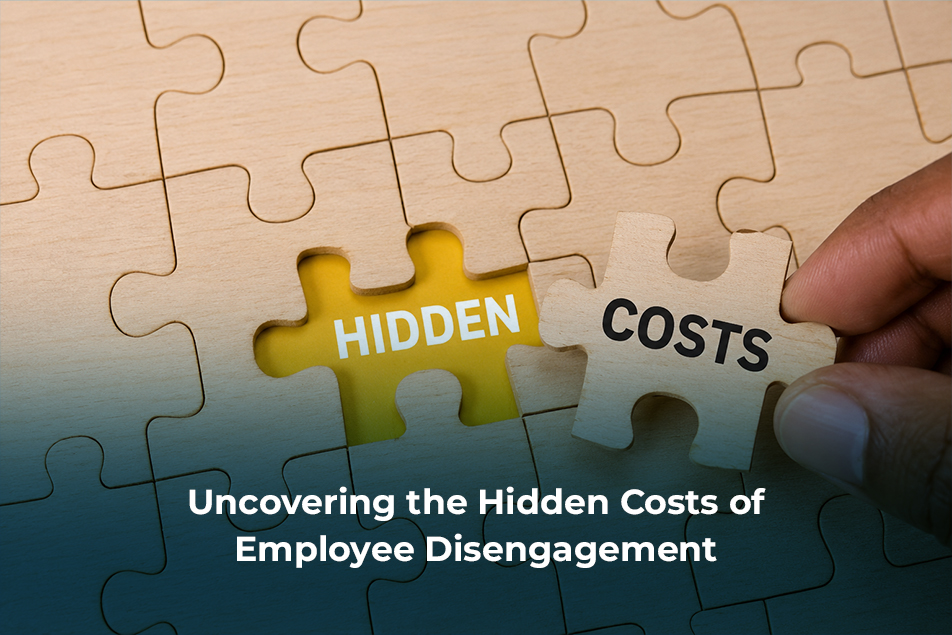
Uncovering the Hidden Costs of Employee Disengagement
Enough studies and research have shown that engaged and motivated employees are more productive and are likely to stay longer at their job. Given this information, one would think organizations would be scrambling to keep employees happy. However, numbers show otherwise. According to Gallup, a mere 23% of employees worldwide feel engaged at work.
On the flip side, the numbers of an engaged workforce speak for themselves. Engaged employees are 21% more productive than their peers and are 87% less likely to leave their current employer. This does not happen naturally, and enterprises need to work to build an engaged workforce.
However, it can still be rather challenging for leaders, especially in HR, who find it that much harder to justify employee engagement initiatives and struggle to demonstrate employee ROI data.
In this article we will elaborate on the hidden costs of employee disengagement, employee engagement ROI, and the benefits of having engaged employees.
But first, let’s understand what is employee engagement ROI. Simply put, it is the measure of financial returns from investing in employee engagement strategies. You can arrive at your organization’s employee engagement ROI by using an employee engagement ROI calculator.
How Does Employee Engagement Impact Business?
The engagement of an employee has a direct impact on the bottom-line. We call this the ROI of employee engagement. However, many businesses continue to struggle with finding the right employee engagement ROI strategies.
Let’s take a look at the areas of a business impacted by employee engagement and their ROI.
- Employee Productivity
- Employee Retention
- Employee Onboarding
- Employee Absenteeism
- Customer Satisfaction
Employee Productivity
We’ve already established the connection between employee engagement and overall productivity. Engaged teams in your organization will be 21% more productive than teams that aren’t. Translated into ROI terms, what this means is that if you have ten engaged teams, then you gain the equivalent of another team in terms of productivity.
Employee Retention
Disengaged employees have fewer reasons to stay in a job, and all managers know the costs of hiring and training new employees, and the added burden of lost productivity. This is why enterprises need employee engagement strategies to hold on to their top talent. Engaged employees care about their work and will go out of their way to look for solutions to problems. Their motivation will extend beyond their paycheck and the chances of losing them to another organization is greatly minimized.
Employee Onboarding
Onboarding is the first engagement of an employee with your organization and it is key to making a good impression. Employees with a negative onboarding experience will be less inclined to join your organization and are likely to look for other opportunities.
Onboarding is a resource-consuming activity, and poor onboarding will make the process costly, less effective, and a regular part of organizational operations.
Employee Absenteeism
Absenteeism is directly linked to disengagement. When an employee is off work frequently, you can safely assume that the employee is stressed, has lost interest in work, and suffers from burnout. Absenteeism costs money, and when disengagement is widespread in the organization, the numbers are even higher.
Addressing disengagement in the early stages will help to save money from lost days, low productivity, and stress related illness.
Customer Satisfaction
Engaged teams will automatically have higher customer ratings. Motivated and happy employees will provide a more pleasant customer experience and be willing to exceed expectations to keep customers happy.
This isn’t limited to just customer-facing roles. Quality of products and services developed by engaged teams will also be higher and lead to better consumer experiences.
Customers are more likely to make another purchase or refer the business to others after a positive customer service experience.
Benefits of Engaged Employees
Having an engaged and motivated workforce can have several benefits. Here are some of the top reasons to focus on employee engagement:
- Greater Employee Advocacy
- Increased Profits
- Significantly Fewer Sick Days Taken
- More Employee Participation
Greater Employee Advocacy
Engaged employees are not only happy and proud of the place they work in, but they are also likely to become brand advocates themselves. They will talk about the company in a positive light, showing that how a business is perceived internally can decide its reputation in the outside world.
Increased Profits
The more engaged the employee, the greater their productivity, naturally leading to higher revenue. When an employee is emotionally invested in an organization, they will want the business to succeed and will work towards making it a reality.
Significantly Fewer Sick Days
Happy, engaged employees miss fewer days due to health-related issues. Disengaged workers tend to be more stressed, and this leads to anxiety, depression and a host of other mental and physical illnesses. As a result, disengaged employees take more days off and this has a direct impact on output and eventually on the bottom line of the business.
More Employee Participation
Engaged employees are more active and interested in the future of the organization. They will be keen to be involved in discussions and meetings. Overall collaboration will increase, leading to more aligned workers. Creativity and innovation will peak, and employees will find the courage and confidence to share their ideas at work.
ProHance Helps You Track Employee Engagement
Tracking and improving employee engagement doesn’t happen automatically. Leaders and organizations need to invest in targeted strategies and make cultural changes for results to show. The best part is that these investments can make a huge difference to your business – and the benefits can be measured.
If you’re feeling overwhelmed with the idea of launching employee engagement initiatives, ProHance can help. We have a set of unique tools that have been designed to help enterprises measure and improve employee engagement.
Our platform can cater to your specific needs and support your employee enablement initiatives, including, performance reviews, surveys, feedback programs, goals and OKRs, etc.
You can leverage employee engagement data and use the gained insights to understand how your people feel, giving you the ‘data’ to continue making improvements in your employee engagement plans.
Learn how ProHance can help

Arvind Sagar
Arvind Sagar is a Senior Advisor at ProHance, bringing extensive experience in strategic advisory roles. He has worked across diverse industries including IT services, consulting, and business transformation. At ProHance, he guides enterprise clients in driving operational efficiency and digital transformation.
