




Joining Stainless Steel to Carbon Steel: A Complete Guide
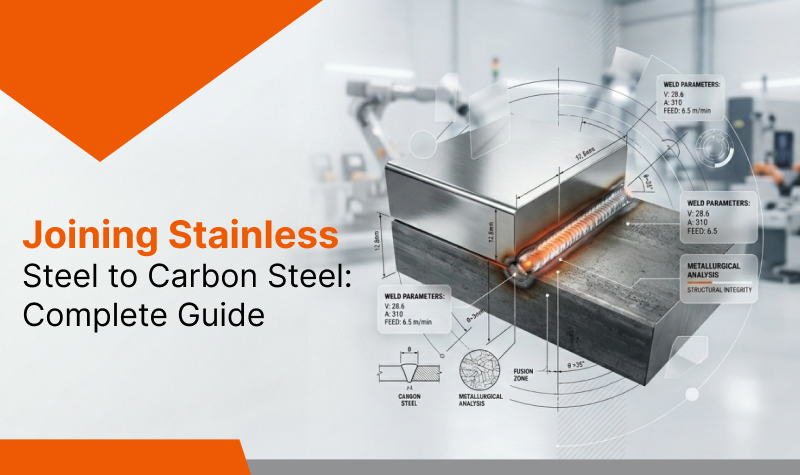
Joining stainless steel to carbon steel is a routine requirement across fabrication sectors such as industrial equipment manufacturing, architectural metalwork and structural applications. The two materials behave differently under heat, respond differently to cooling and react differently to environmental exposure. If those differences are not addressed during welding, the joint may suffer from cracking, distortion or premature corrosion.
Fabricators often need to weld stainless steel to carbon steel when strength, durability and cost control must coexist within the same assembly. Achieving this balance depends on understanding metallurgical behaviour, selecting suitable consumables and applying controlled welding practices that support long-term performance.
Why Stainless Steel and Carbon Steel Require Special Welding Practices
Carbon steel and stainless steel differ in chemical composition and thermal response. Stainless steel contains chromium and often nickel, which provide corrosion resistance but increase thermal expansion. Carbon steel expands less and cools faster, making it more dimensionally stable but vulnerable to corrosion.
When these metals are joined, the weld becomes a transition zone where dilution, residual stress and chemical imbalance can occur. Therefore, carbon steel to stainless steel welding requires managing these risks rather than treating the joint as a standard mild steel weld.
Key Considerations When Joining Stainless Steel to Carbon Steel
Successfully welding stainless steel to carbon steel depends on managing how these two distinct metals interact under heat and environmental stress.
- Galvanic corrosion: When stainless steel and carbon steel are joined and exposed to moisture, stainless steel acts as a noble metal. This can cause accelerated corrosion of the carbon steel unless the weld metal and joint design minimise exposure and imbalance.
- Thermal expansion mismatch: Stainless steel expands approximately 50 percent more than carbon steel. During cooling, this difference can introduce stresses that lead to cracking or distortion if heat input is not controlled.
- Dilution control: Excessive mixing of carbon steel into the weld pool reduces chromium and nickel levels. This increases the risk of hot cracking and reduces corrosion resistance. The weld metal must remain sufficiently alloyed to compensate for dilution.
These considerations explain why filler metal selection and welding parameters are central to joint reliability.
Common Welding Processes Used
Choosing the right method depends on your working environment, material thickness and the specific demands of the project.
- MIG welding (GMAW): Widely used in workshop fabrication due to productivity and stable arc control. Requires appropriate shielding gas and filler wire to maintain alloy balance.
- TIG welding (GTAW): Offers precise heat control and clean welds. Often chosen for thinner sections, visible joints or applications requiring tight control over penetration and dilution.
- Stick welding (SMAW): Stick welding stainless steel to carbon steel is common for site work and repairs. It is tolerant of outdoor conditions but depends heavily on correct electrode choice and technique.
Each process can produce durable joints when heat input and consumables are correctly managed.
Filler Metal Selection and the 309 Approach
The choice of filler metal is the most decisive factor in dissimilar metal welding. Industry practice favours over-alloyed fillers that compensate for dilution from carbon steel.
Commonly used options include:
- ER309L / E309L-16 or E309L-17: The most common choice for joining 300-series is stainless steel to carbon steel. Provides sufficient chromium and nickel to resist cracking and corrosion.
- ER309LMo: Suitable when joining molybdenum-bearing stainless steels, such as 316, to carbon steel.
- 312 stainless fillers: Used for highly restrained joints or applications requiring high crack resistance.
The objective is not to match base metals but to create a high-alloy transition zone that safely tolerates metallurgical differences.
Joint Preparation and Welding Technique
Achieving a flawless, crack-resistant bond depends heavily on the steps taken before and during the actual arc strike.
- Surfaces must be clean, dry and free from oil, rust and moisture
- Stainless steel preparation tools should be kept separate to avoid carbon contamination
- Joint fit-up should allow adequate penetration without excessive heat input
During welding, controlled heat input is essential. Short arc lengths, steady travel speed and balanced welding sequences help limit dilution and residual stress. Where practical, welding from the carbon steel side can reduce overheating of the stainless component.
Consumables That Support Consistent Dissimilar Metal Welding
For fabricators working regularly with mixed-material joints, consumable consistency is critical. Variations in chemistry or coating behaviour can change arc stability, dilution levels and final weld properties.
At Superon Technik, we offer stainless steel electrodes, filler wires and welding accessories developed for predictable performance across dissimilar metal applications. Consistent quality supports stress-free usage on the shop floor, reducing the need for parameter adjustments or rework.
We also ensure consistent pricing across the country, allowing fabricators and traders to plan without concern for regional variation. Easy availability across India gives customers multiple purchasing options while maintaining the same product performance.
Advantages of Correctly Welding Stainless Steel to Carbon Steel
Achieving a proper metallurgical bond between these two distinct metals delivers significant operational and economic advantages.
- Combines corrosion resistance with structural strength
- Reduces material costs by limiting stainless steel usage
- Improves service life in mixed-material assemblies
- Maintains mechanical integrity without compromising durability
These advantages explain why dissimilar metal welding remains a preferred solution despite its technical demands.
Common Mistakes to Avoid
Achieving a durable joint depends on precise technique, as even minor procedural deviations can compromise the entire structure.
Here are the critical errors to avoid during the fabrication process:
- Using carbon steel electrodes for dissimilar joints
- Ignoring dilution when selecting filler metals
- Allowing stainless steel contamination during preparation
- Applying excessive heat input without control
Avoiding these issues depends more on discipline than on equipment complexity.
Conclusion
Joining stainless steel to carbon steel is about managing differences rather than overcoming them. With the right filler strategy, controlled welding practices and dependable consumables, fabricators can produce joints that perform reliably in real service conditions.
For those handling dissimilar metal fabrication regularly, reviewing consumable selection and standardising procedures is a practical next step. Working with consistent products and established practices allows fabrication teams to focus on quality execution rather than corrective work, supporting both efficiency and long-term reliability.
Master your dissimilar metal welding with Superon Technik. Explore our premium range of filler wires and electrodes today for strong, crack-resistant joints!
Learn how ProHance can help

Anshul Jain
As Head of Marketing for ProHance, Anshul spearhead global marketing initiatives, championing product promotion, brand awareness, and engaging communications. He indulges his passion for writing, crafting captivating content that resonates with our audience whenever possible.
