




Welding Spatter: Causes, Prevention & Control Techniques
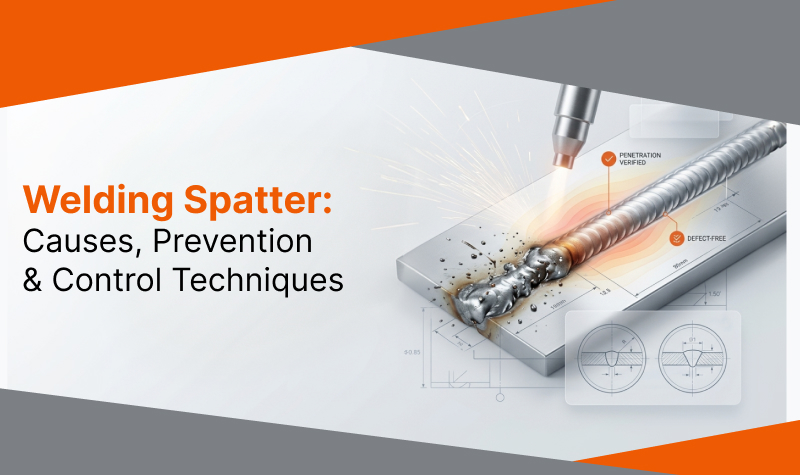
Anyone who spends time around welding knows the frustration of metal droplets scattered around an otherwise clean joint. These tiny particles may seem insignificant at first, but over the course of a job, they add up to extra grinding, uneven finishes and lost time. Spatter in welding is not just a visual issue. It is often an early sign that something in the welding setup or technique is not working as it should.
Whether working on stainless steel railings, kitchen equipment or structural components, controlling welding spatter plays a key role in achieving consistent results. When the arc is stable and the process is well balanced, welds are cleaner, finishing effort is reduced and overall output improves. Understanding why spatter occurs and how to control it allows welders to correct problems at the source rather than deal with them after the weld is complete.
What is Welding Spatter?
Weld spatter is the ejection of molten metal droplets from the weld zone that adhere to surrounding surfaces. These droplets form when molten metal separates from the weld pool instead of transferring smoothly into the joint. Once expelled, they cool rapidly and bond to nearby metal surfaces, tools or fixtures.
A limited amount of spatter is normal in most arc welding processes. However, excessive welding spatter usually indicates arc instability, incorrect machine settings or disturbances in shielding. Beyond appearance, spatter affects efficiency by increasing post-weld cleaning time and can compromise surface integrity in applications where finish quality is critical.
Primary Causes of Welding Spatter
Welding spatter is usually the result of several factors acting together rather than a single fault.
Incorrect voltage and amperage
When the voltage is too low relative to the wire feed speed, the wire tends to stub into the weld pool, causing molten metal to splash outward. Excessive voltage creates a long, unstable arc that scatters droplets. A correct balance between these parameters is essential for smooth metal transfer.
Improper shielding gas selection or flow
Using 100% CO₂ or incorrect gas flow rates often leads to turbulent shielding. This turbulence destabilises the arc and increases spatter. Mixed gases such as Argon/CO₂ support calmer arc conditions and better control.
Surface contamination on the base material
Mill scale, rust, paint, oil, and zinc coatings interfere with the flow of electrical current. These contaminants cause sudden arc fluctuations, often heard as popping or crackling, which force molten metal out of the weld pool.
Incorrect torch angle and stick-out
Torch angles steeper than 15–20 degrees disrupt shielding gas coverage and expose the weld pool to the atmosphere. Excessive stick-out reduces current stability, thereby increasing spatter formation.
Erratic wire feeding or worn equipment parts
Damaged liners, worn contact tips or inconsistent wire feed speed interrupt current delivery. These interruptions destabilise the arc and lead to uneven melting of filler metal.
In most cases, welding spatter is not the result of a single mistake but a combination of electrical settings, material condition and technique, all of which can be corrected with careful attention to process control.
Effects of Excessive Welding Spatter
When spatter is not controlled, its impact goes beyond appearance:
- Increased grinding, chipping and cleaning time
- Higher wastage of filler material
- Faster wear of nozzles and contact tips
- Inconsistent weld appearance across similar jobs
- Reduced overall productivity
Across repeated jobs, these effects lead to delays, higher operating costs and avoidable rework.
Proven Techniques to Prevent and Control Welding Spatter
Effective spatter control relies on disciplined setup and consistent execution rather than frequent trial-and-error changes.
Calibrate machine settings accurately
Voltage, amperage and wire feed speed should match material thickness and joint configuration. Even small adjustments can significantly improve arc stability.
Optimise shielding gas composition and flow
Switching from pure CO₂ to mixed shielding gases improves metal transfer and reduces turbulence around the weld pool. Flow rates should protect the weld without disturbing it.
Prepare the base material thoroughly
Grinding away mill scale, rust and coatings before welding ensures steady current flow. Clean surfaces support predictable arc behaviour and smoother weld pool dynamics.
Refine the welding technique
Maintaining consistent travel speed and holding the torch at a 10°–15° work angle helps direct molten metal into the joint. Short arc lengths provide better control and reduce droplet ejection.
Maintain equipment regularly
Routine inspection and timely replacement of contact tips, liners and nozzles help maintain electrical continuity and stable gas coverage.
When these preventive measures are applied together rather than in isolation, spatter levels reduce naturally and weld quality becomes more consistent across repeated jobs.
Why Consistency Matters on the Shop Floor?
Consistency in welding conditions plays a decisive role in controlling spatter, as even small variations in inputs or setup can quickly affect arc stability and overall weld quality.
- Stable inputs reduce frequent machine readjustments
- Predictable arc behaviour supports uniform technique
- Lower spatter levels reduce post-weld finishing time
- Consistent conditions lead to repeatable weld quality
- Reduced downtime from avoidable equipment issues
Consistency allows welders to focus on execution rather than troubleshooting.
Choosing Reliable Welding Consumables
While technique and settings are critical, results are difficult to maintain without dependable consumables. Consistency in electrodes and welding filler wires supports stable arcs and predictable melting behaviour, helping reduce common welding issues such as excessive spatter.
Superon Technik supports welders with a complete range of stainless steel welding consumables designed for consistent performance. With dependable quality, transparent pricing under a one-country-one-price promise and easy availability across India, we simplified sourcing for daily welding needs. We also aim to be a single, reliable partner so users can focus on welding quality rather than managing multiple suppliers or fluctuating inputs.
Conclusion
Welding spatter is a clear indicator of how well the welding process is controlled. Excessive spatter points to issues with parameters, technique or preparation, while controlled spatter reflects stable conditions and efficient metal transfer. By understanding its causes and applying proven prevention methods, welders can achieve cleaner joints, reduce finishing effort and maintain consistent quality across jobs. Reviewing current settings, equipment condition and consumable choices is a practical step towards improving results and ensuring dependable welding performance.
Learn how ProHance can help
