




Low Employee Productivity: Causes and Solutions
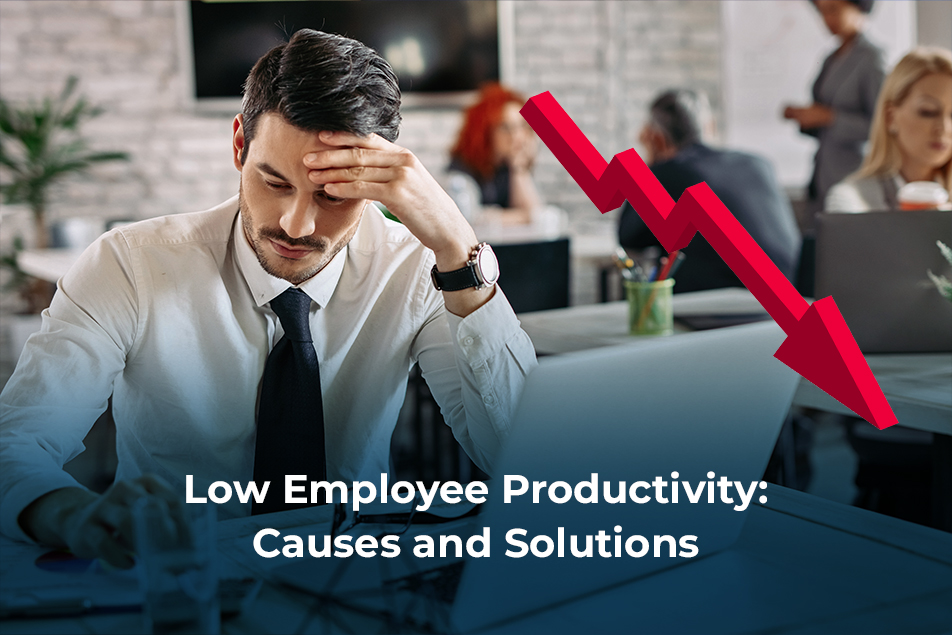
Addressing Low Employee Productivity at the Workplace: Causes and Solutions
Productivity has the power to make or break an organization’s success and growth. While high productivity can give a competitive edge, decreased productivity in the workplace can have a direct impact on efficiency and profitability.
There could be many reasons for low employee productivity, and it’s important to understand each cause to improve performance and drive continuous growth. Managers and leaders must take a systematic, strategic approach that can help identify the causes for low productivity at work and work towards sustained success.
Before you address low employee productivity, it is crucial to understand what’s causing it. Most times, it occurs as a result of one or more of these seven reasons.
Seven Most Common Causes of Low Employee Productivity
While low employee productivity can be attributed to external or internal causes, it is usually internal and can therefore be solved much more easily. Let’s take a look at the most common reasons your employees are displaying low productivity.
- Lack of Motivation
- Poor Management
- Insufficient Training
- Mismatched Role Alignment
- Unbalanced Workloads
- Personal Challenges
- Too Many Commitments
Lack of Motivation
When employees don’t have enough work or don’t feel engaged in their tasks, they are less likely to be committed to work. Organizations that haven’t built a culture of encouragement, or don’t take the effort to recognize and reward achievements, are the ones that suffer from unmotivated employees.
Poor Management
Another factor resulting in low productivity at work is bad management practices. However high-performing or independent your employees might be, they need help managing their time and prioritizing projects. The lack of guidance and support can be frustrating. A manager’s failure to communicate and provide feedback can drop team productivity.
Insufficient Training
Employees are looking to enhance their skills and improve their work performance. If there’s no training or learning, they feel the company is not invested in them. Without proper training, employees might not be able to cope with changes in the industry, and productivity suffers.
Mismatched Role Alignment
When employees are given responsibilities that reflect their skills and strengths, productivity naturally increases. On the flip side, if employees are tasked with work that is outside their normal scope, the result is diametrically opposite. This happens when employees do not feel comfortable saying “no” or when they don’t receive proper training for the added responsibilities.
Unbalanced Workloads
In an ideal scenario, all employees should have more or less equal workloads. When some employees take on too much work and others don’t have enough to do, it can lead to productivity problems. The overworked employees will eventually burn out and become unmotivated, and the underutilized employees will begin to feel undervalued and unchallenged.
Personal Challenges
Employee well-being is crucial to an organization’s success. If an employee faces unaddressed personal problems, such as financial stress or health issues, it is challenging for them to perform at their best. If the work environment doesn’t encourage open communication and people don’t feel comfortable seeking help, the impact will be on productivity.
Too Many Commitments
Many companies take pride in late hours and weekend work. However, these businesses will also suffer from low productivity. The more you pile up on your employees, the greater their risk of burnout. The result: fatigue, less engagement, and inferior work quality. Does your company culture reward “yes” and punish “no”?
Some Easy Strategies to Boost Employee Productivity
Once you’ve identified the primary causes of low employee productivity, you can work towards addressing those issues and providing the right support to your employees. Here are a few strategies for creating a more productive work environment.
- Enhance Motivation
- Improve Management Practices
- Consider Employee Training
- Match Skill and Responsibilities
- Rebalance Workloads
- Support Work-life Balance
- Help Overworked Employees
Enhance Motivation
Employee morale plays a big role here. If your employees feel motivated, they are more likely to give their best, and more. Motivating them is easy. Set clear expectations, have open conversations, and reward a job well done.
Improve Management Practices
Take a look at your leaders. Strong managers can inspire and guide your people. However, not all managers are born. You might want to consider investing in leadership development programs that will teach how to set goals, communicate effectively, and offer employees the right support.
Consider Employee Training
Provide your employees with all the knowledge and tools they need to do their jobs. Providing regular training programs and upskilling opportunities will go a long way in improving abilities and overall performance. This also helps stay in touch with the latest industry trends and technologies.
Match Skill and Responsibilities
It is important to prioritize employee roles and responsibilities regularly. Taking the time to match the job description with the skills of the person hired and then comparing it with their actual day-to-day work will reveal discrepancies, if any. This helps improve employee productivity without making drastic organizational changes.
Rebalance Workloads
Many organizations notice that some employees work long hours while others don’t have enough to do. Such unbalanced workloads can have an impact on morale and productivity as well. Identify all the tasks allocated to a team and then determine the best person for each, thus dividing workloads evenly. Undertaking this task periodically will help reduce the risk of burnout and ensure each person can be as productive as possible.
Support Work-life Balance
Organizations should not be focused on just the work that an employee does. Supporting them in their personal lives is also important. Organizations that take care of their employees’ mental health will observe an increase in productivity. Employee assistance programs, flexible work arrangements, and counselling can help people manage personal challenges effectively.
Help Overworked Employees
Do your employees seem overworked? Instead of waiting until the end of the project, step in to address overwhelm as soon as possible. The sooner you do, the better your entire team will be able to meet its goals. Time management tools or flexible work hours can support employees in their quest for productivity.
Conclusion: Ready to Increase Employee Productivity?
Multiple factors can alter an employee’s ability to perform at their peak. Stress, burnout, workplace culture, insufficient training, and lack of communication are some typical causes. If these issues are addressed on time, you can improve productivity at your organization.
Learn how ProHance can help

Abhishek Tahlan
Abhishek is a marketing professional with more than 7 years of experience in the field of digital marketing. He has worked in various senior marketing roles across a wide variety of organizations and industries, including EdTech and Tech.
